SoundCloud vs Spotify: Which One Should You Use?
Soundcloud vs Spotify? In this article, you’ll find a detailed comparison between these twoin 2026, covering pricing, artist support, discovery features, and more. If you’re a mainstream listenerwho values polished playlists and chart-topping content, Spotify is likely your go-to. But if you’re an indie artist, an underground music fan, or someone looking to upload and promote original tracks, SoundCloud may be the better platform—or even the essential companion.
🚀 Want to Get Noticed Faster?
Whether you’re an indie creator on SoundCloud or building a global audience on Spotify, the right promotion can make all the difference. Don’t wait for luck—take control of your success now.
Grow your presence, attract more listeners, and unlock the momentum your music deserves. BuzzVoice helps you rise faster in 2026‘s competitive streaming world.
Introduction to Music Streaming
Music streaming has completely transformed the way we listen to music, making it easier than ever to access millions of songs from virtually anywhere. Today’s music streaming platforms offer a range of features designed to enhance the music listening experience, from curated playlists to high-quality audio and offline playback.
Among the best streaming services, SoundCloud and Spotify stand out as two of the most influential players in the music industry.
Spotify Premium, for example, is known for its ad-free listening, better audio quality, and the ability to download tracks for offline playback—features that appeal to users who want a seamless, uninterrupted experience.
Meanwhile, Soundcloud plays out a niche for itself by supporting independent music and allowing users to upload and share their tracks, making it a favorite among emerging artists and fans of underground music.
As streaming services continue to evolve, both SoundCloud and Spotify offer unique advantages, catering to different listening habits and preferences.
SoundCloud vs Spotify – What’s the Main Difference?
Spotify dominates with its global reach, label partnerships, and seamless integration across devices, making it the go-to music streaming service for curated, commercial music experiences. It’s ideal for users who value convenience, consistency, and top-chart content.
This article will compare SoundCloud to other leading platforms, helping you decide which music streaming service best fits your needs.
In contrast, SoundCloud thrives on grassroots creativity, favoring experimental sounds, emerging genres, and direct fan-to-artist interaction. It remains unmatched in providing flexibility for both new artists and curious listeners.
Pricing & Plans (2026 Update)
| Platform | Free Plan Features | Paid Plans & Cost | Artist Plans & Features |
| Spotify | Ad-supported listening, shuffle-only on mobile, limited skips | Premium $9.99/month; Student $5.99; Duo $12.99; Family $15.99 | No native artist upload; distribution via third-party services like DistroKid or TuneCore |
| SoundCloud | Basic listening with ads, limited skips, user uploads allowed | Go $4.99/month (ad-free), Go+ $9.99 (HQ audio, full catalog) | Pro Unlimited $16/month: unlimited uploads, audience stats, monetization through Repost |
Note: Both Spotify and SoundCloud offer a free tier (free version) with ads and feature limitations, such as lower audio quality and no offline listening. Upgrading to a premium subscription or premium version unlocks additional features like ad-free playback, offline access, and higher sound quality.
Spotify and SoundCloud both provide premium subscription options that remove ads, allow offline listening, and improve audio quality. The premium version of each platform is designed to enhance the user experience and provide more value, especially for frequent listeners.
Spotify’s premium plans also include access to exclusive content, which can be a key incentive for users to upgrade. When comparing the pricing structure, Spotify, SoundCloud, and Amazon Music all offer multiple tiers to suit different needs and budgets, with similar monthly costs for their main premium plans.
Key Differences:
- Spotify focuses on delivering value to end users, offering polished playback and family-sharing plans. The platform offers curated playlists, seamless device integration, and exclusive content for premium subscribers.
- SoundCloud’s model is split: casual listeners benefit from cheaper ad-free options, while creators can pay to unlock upload and revenue tools. The platform offers unique discovery features, direct fan engagement, and flexible upload limits.
- Only SoundCloud allows direct uploads from users without external distributors—ideal for emerging artists. The platform offers instant publishing and community-driven feedback.
- Go+ gives access to licensed music and offline listening, while Pro Unlimited is geared toward professional creators seeking growth tools and monetization opportunities. Each plan the platform offers includes specific benefits like advanced analytics, unlimited uploads, and enhanced monetization.
- Spotify includes audiobooks and podcasts in some tiers, while SoundCloud’s paid tiers are more music-focused. The platform offers a broad content library and personalized recommendations.
In 2026, the flexibility of SoundCloud’s artist-first pricing remains a major draw for DIY musicians, while Spotify’s tiers appeal more to families, students, and mainstream listeners looking for consistency and ease of use.
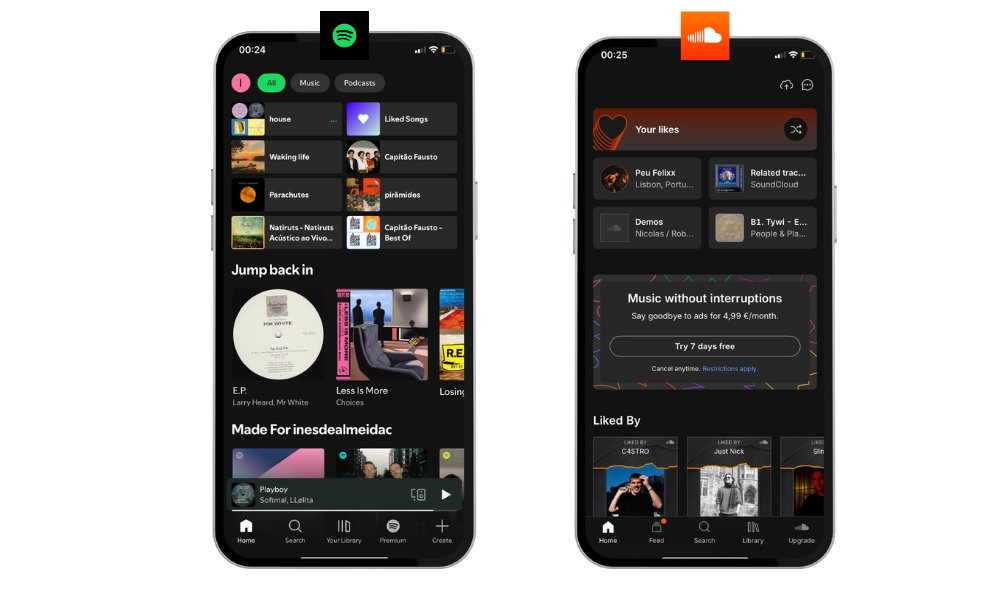
Music Libraries and Content
When it comes to music libraries, both SoundCloud and Spotify offer impressive catalogs, but their strengths lie in different areas. SoundCloud boasts over 200 million tracks, making it a haven for independent music, underground artists, and niche genres that you might not find on other platforms.
This diversity allows users to discover new music and fresh sounds, often before they hit the mainstream. The platform’s related tracks feature encourages serendipitous discovery, suggesting songs based on what you’re currently listening to and helping you explore new artists and genres.
Spotify, on the other hand, features a more polished and curated catalog with over 50 million songs, covering a wide range of genres and moods. It’s acclaimed Discover Weekly and Daily Mixes playlists use advanced algorithms to curate personalized playlists based on your listening habits, ensuring you’re always introduced to new tracks that match your taste.
Both SoundCloud and Spotify make it easy to build and manage playlists, but Spotify’s integration of editorial content and algorithmic recommendations gives it an edge for users who want a more guided discovery experience. For those seeking an even more extensive catalog, Apple Music offers over 60 million songs, further expanding the options available to music lovers.
Related: How to make an album on SoundCloud
Music Discovery and Personalization
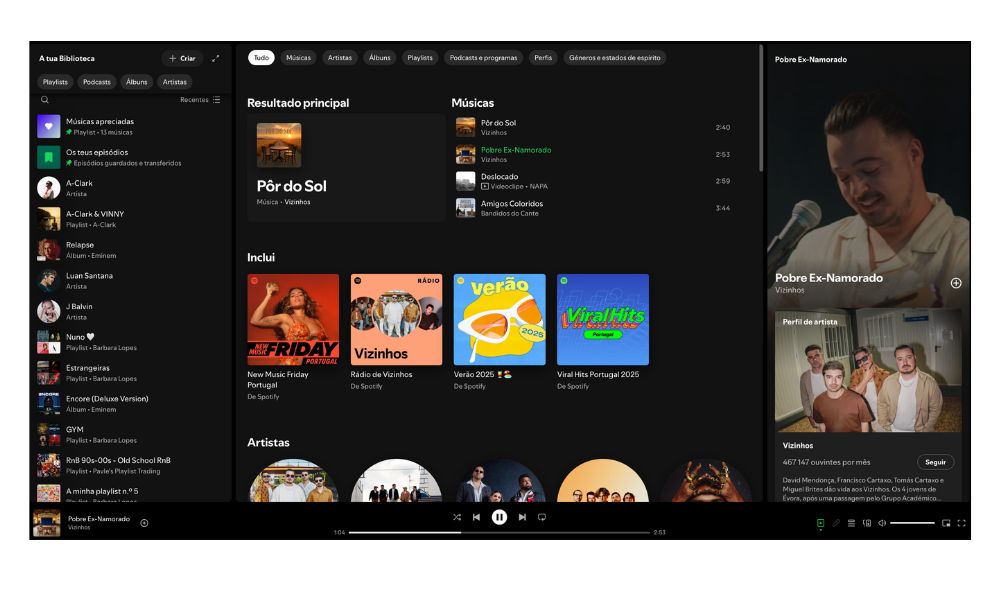
Spotify: Offers sophisticated algorithms like Discover Weekly and Release Radar, ideal for discovering mainstream and niche music. Spotify also highlights new releases and trending tracks through curated playlists and charts, making it easy for users to find the latest and most popular songs.
Its discovery tools and analytics help artists reach a broader audience by increasing visibility across diverse listener groups. Unique features such as playlist pitching and personalized recommendations set Spotify apart in music discovery.
SoundCloud: Showcases raw, underground, and user-generated content—perfect for uncovering emerging artists and remixes. SoundCloud also features sections for new releases and trending tracks, helping users explore fresh and popular music from independent creators. Its unique features include direct artist-to-fan interaction and a focus on community-driven discovery.
Music Discovery Comparison: Both Spotify and SoundCloud offer robust music discovery and personalization, but Spotify emphasizes algorithm-driven recommendations and a larger content library, while SoundCloud focuses on grassroots discovery and independent talent.
Audience Appeal: SoundCloud remains a go-to platform for Gen Z and indie fans searching for authenticity.
Community and Interaction
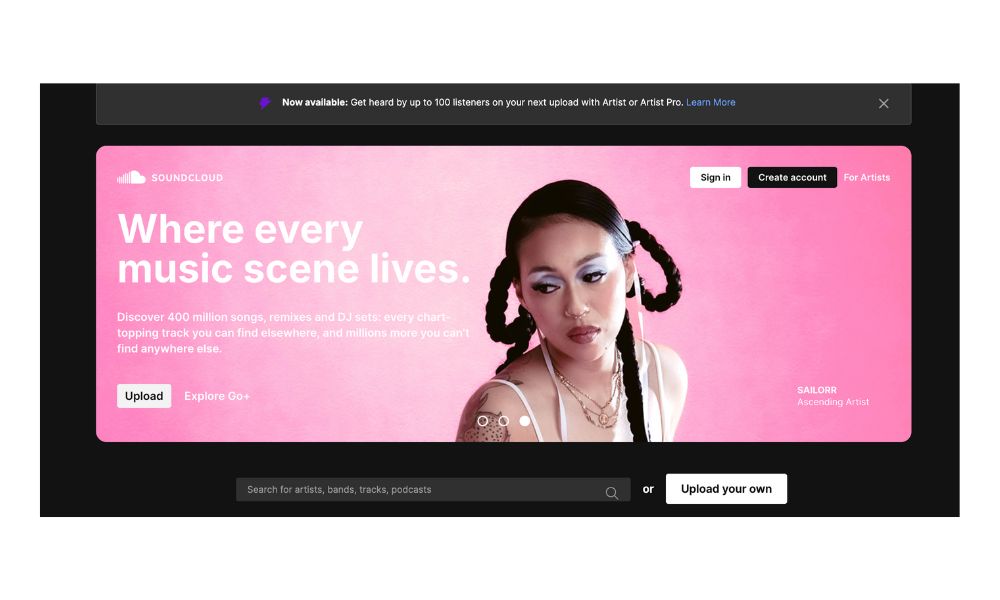
SoundCloud is often described as a social network for music, offering a level of community interaction that sets it apart from other streaming platforms.
Users can comment directly on tracks, repost songs to their own profiles, and share their favorite music with friends, fostering a sense of connection between artists and listeners. This interactive environment is especially valuable for emerging artists, who can engage with their audience, receive feedback, and build a loyal following.
Spotify, while more focused on the listening experience, still offers ways for users to connect. Features like collaborative playlists allow friends to curate playlists together, and the Spotify Profile lets users showcase their favorite tracks and playlists.
Although Spotify’s social features are more limited compared to SoundCloud, they still provide opportunities for sharing and discovering music within your network. YouTube Music has also entered the scene with social features that let users share songs and playlists, but SoundCloud remains the leader in fostering direct artist-to-fan and fan-to-fan interaction.
For those who value community and engagement, SoundCloud’s social features make it a standout choice among music streaming services.
Related Article: How To Get More Followers on SoundCloud
Audio Quality & User Experience
Spotify UX: Smooth, consistent, supports up to 320 kbps streaming quality, offline listening, and seamless device integration via Spotify Connect. Its user interface is highly user-friendly, with an intuitive layout, easy playlist management, and advanced personalization. Spotify’s sound quality is generally superior, especially noticeable in genres like classical music, where audio fidelity and clarity are crucial for overall enjoyment.
SoundCloud UX: Supports high-quality uploads, though sound quality and streaming quality can vary based on user submissions. Go+ offers up to 256 kbps AAC. The user interface is less uniform but user-friendly for creators, offering more freedom and flexibility. SoundCloud’s streaming options include free listening with ads, SoundCloud Go, and Go+ for higher quality and offline access.
Interface Comparison: Spotify delivers a polished, professional user interface ideal for casual listeners and those seeking a streamlined, user-friendly experience. SoundCloud, while less sleek, appeals to users who value community interaction, comments on tracks, and a raw, authentic feel.
Both platforms offer different streaming options and sound quality levels, which can significantly impact the overall enjoyment of the listening experience, especially for users who prioritize audio fidelity in genres like classical music.
For Artists: Which Platform Pays and Supports Better?
Spotify: Huge audience—over 678 million monthly users with 268 million subscribers; payment is low per stream (~$0.003–$0.005). Uploads require third-party distributors like DistroKid or TuneCore, which add extra cost and steps.
Spotify supports artists through royalty payments and promotional tools such as playlist placements and artist profiles. Its massive library attracts both artists and listeners, offering exposure to a wide and diverse audience. For most users, Spotify is generally better due to its extensive catalog, streamlined navigation, and global reach.
SoundCloud: Enables free uploads, real-time analytics, direct fan engagement, and monetization tools via Repost and Pro accounts (plus Repost by SoundCloud). Artists can retain more control over their content and revenue streams.
SoundCloud supports artists by allowing them to upload and manage each track directly, set monetization options, and interact with fans. The ability to repost tracks is a unique community feature, letting users share and promote tracks within their network to boost visibility and support fellow artists.
Conclusion for Artists: Use SoundCloud for creative control, flexible publishing, and initial audience-building. Spotify is better suited for scaling, accessing global reach, and benefiting from curated playlists and algorithmic exposure.
Soundcloud vs Spotify: Pros & Cons
Spotify Pros:
- Industry standard with polished UX & vast podcast library;
- Powerful discovery tools;
- Seamless multi-device playback;
- Easy sharing and integration with various platforms for music sharing and playback;
- Strong global brand recognition and partnerships;
- Built-in editorial playlists and charts to boost visibility.
Spotify Cons:
- Lower artist pay per stream;
- Artist uploads depend on distributors;
- Limited interaction with fans;
- Fewer tools for grassroots promotion or niche genres.
SoundCloud Pros:
- Ideal for discovery & community feedback;
- Easy content uploading and remix sharing;
- Strong indie artist support & monetization possibilities;
- Nurtures underground scenes and subcultures;
- Direct fan interaction and repost culture strengthen organic growth;
- SoundCloud’s unique community-driven platform fosters artist collaboration and supports independent creators.
SoundCloud Cons:
- Less consistent audio quality;
- UX is less polished;
- Smaller mainstream audience;
- Less integration with smart home and automotive systems;
- Discovery can be overwhelming without curated guidance.
This comparison shows that while Spotify focuses on a streamlined user experience and scale, SoundCloud emphasizes creator freedom and a vibrant, DIY music culture.
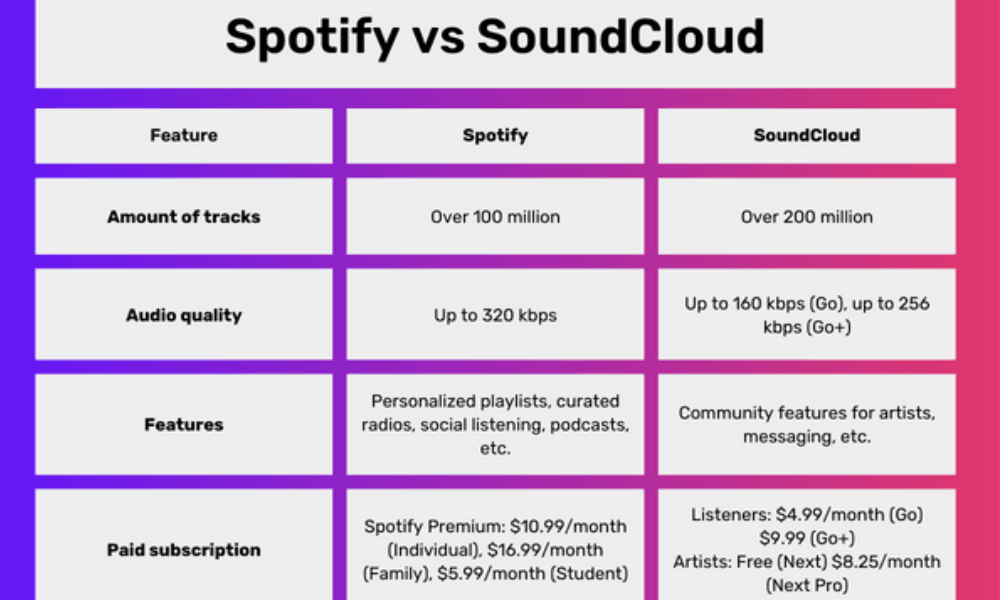
Final Verdict – Which Should You Use in 2026?
Spotify is a game changer for users who enjoy mainstream music, curated playlists, and a sleek, highly personalized experience. Its advanced algorithm makes discovering popular tracks effortless and tailored to your taste.
SoundCloud, on the other hand, caters to independent artists, remix culture, and underground music fans, offering a raw, open, and community-driven environment.
Many users combine both platforms—leveraging SoundCloud for creativity, discovery, and uploads, while relying on Spotify for consistent streaming, wide availability, and passive listening across devices.
Looking to grow your audience and gain real traction on SoundCloud? With BuzzVoice for SoundCloud, you can buy SoundCloud likes, boost your plays, increase visibility, and connect with more listeners faster and easier. Stop waiting for algorithms to work in your favor and take control of your music promotion today.
FAQs
Which platform pays artists more fairly in 2026?
Spotify offers the advantage of massive reach, but its per-stream payout remains relatively low—typically around $0.003 to $0.005 per stream. SoundCloud, on the other hand, empowers creators with tools like Repost and fan-powered royalties, allowing more direct and flexible monetization. For independent or emerging artists, SoundCloud is generally the more artist-friendly option in terms of control and potential earnings.
Can you discover more new music on SoundCloud than Spotify?
Yes—SoundCloud is known for its vast collection of underground, unsigned, and experimental music. The platform is a hub for demos, unofficial remixes, and emerging genres that may never reach Spotify’s curated charts. If you’re a listener who values raw talent and unique sounds, SoundCloud offers a deeper and more unpredictable discovery experience.
Is SoundCloud still relevant in 2026?
Absolutely. Despite fierce competition, SoundCloud remains one of the most important platforms for new artists looking to build a following. Its integration of fan interaction, direct uploads, and discovery tools keeps it essential for both creators and curious listeners.
Which one is better for podcast listeners?
Spotify leads in the podcast space, offering millions of episodes, exclusive series, and advanced recommendation systems. The platform has invested heavily in podcasting over the years, making it ideal for both casual and devoted podcast fans. SoundCloud does support podcasts, but its focus remains on music, and podcast discovery is less streamlined by comparison.

BuzzVoice
BuzzVoice is the best place to go when you need instant engagement services on social media. Offering a wide variety of packages for Instagram, Youtube, Facebook, Twitter, Soundcloud & Tiktok.